


Bunk beds can be a practical choice for bedrooms where floor space is limited. They provide two sleeping areas within the footprint of one bed, making them suitable for shared children's rooms, guest bedrooms, and holiday homes. However, choosing the right bunk bed involves more than comparing designs and prices.
Before buying one, consider your room dimensions, safety requirements, mattress compatibility, and the needs of the people who will use it. These factors can help you make a more informed decision.
1. Measure Your Bedroom Space
Start by measuring the available floor area and ceiling height. A bunk bed may fit against a wall but leave insufficient clearance above the top bunk. Remember to account for ladders, windows, doors, and nearby furniture.
A well-planned layout should allow people to move around the room comfortably and access the bed safely. If you are organising a compact bedroom, explore Bedroom Furniture for Space-Saving Layouts to compare furniture options that may suit the available space.
2. Prioritise Bunk Bed Safety
Safety should be a priority, particularly when children will use the bed. Look for secure guardrails on the upper bunk, a stable ladder, and a sturdy frame. Follow the manufacturer's assembly instructions, weight limits, and safety recommendations.
Children under six years old should not use the upper bunk. Keep the ladder area clear, avoid hanging cords or straps from the frame, and check fixings periodically according to the manufacturer's guidance.
Australian buyers should also check applicable product safety requirements and review the supplied warnings before purchasing.
3. Choose a Compatible Mattress
Mattress size and thickness are important when selecting a bunk bed. A mattress that is too small may leave unsafe gaps, while one that is too thick can reduce the effective height of the guardrails.
Always check the recommended mattress dimensions and maximum thickness specified by the bunk bed manufacturer. You can compare Mattresses for Different Bed Sizes when reviewing options for your sleeping setup.
4. Compare Materials and Construction
Bunk beds are commonly available in timber and metal designs. Timber can suit traditional or natural bedroom interiors, while metal frames often complement modern styles. The best choice depends on construction quality, available space, and personal preference.
Inspect the frame joints, ladder attachment, and fastenings before use. Consider how the bed will be assembled and whether it can pass through your doorways and stairways during delivery.
5. Consider Long-Term Practicality
Think about who will use the bunk bed and how their needs may change. Some designs include storage drawers or additional sleeping space, while others have a simple structure that prioritises floor space.
Check the maintenance requirements and ensure the bed can accommodate the intended users. Comparing these details before purchasing can help you avoid choosing a design that looks appealing but does not suit everyday needs.
Frequently Asked Questions
What age is suitable for the top bunk?
Children under six years old should not use the upper bunk. Always follow the manufacturer's age recommendations and safety instructions.
How thick should a bunk bed mattress be?
There is no single thickness suitable for every bunk bed. Follow the manufacturer's specifications and ensure the mattress does not compromise the guardrail height.
Are bunk beds suitable for small bedrooms?
Yes, bunk beds can help save floor space by providing two sleeping areas within one footprint. However, ceiling clearance, room dimensions, and safe access must be considered.
Final Thoughts
Choosing a bunk bed requires careful attention to safety, room measurements, mattress compatibility, and frame construction. Comparing these features before purchasing can help you select a bed that suits your space and intended users. Always follow the manufacturer's instructions to support safe, everyday use.
What to Know About Bunk Beds Before Buying One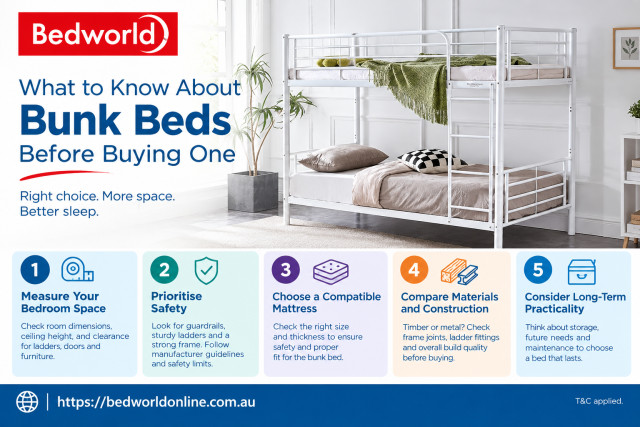 
Visit my Business Website
Welcome Visitor 1
To distribute this article more widely To manage this article or write your own article simply LOGIN
| ||||||
