


A mattress is an important part of your bedroom, so keeping it clean and protected is worth considering. Everyday spills, sweat and accidental moisture can reach the mattress surface and become difficult to clean. This is where a mattress protector can help.
However, when shopping for one, you may come across two common terms: waterproof and water-resistant. Although they sound similar, they offer different levels of liquid protection. Understanding the difference can help you choose the right option for your bedroom.
1. What Is a Waterproof Mattress Protector?
A waterproof mattress protector is designed to prevent liquid from passing through its protective layer and reaching the mattress. Many options use a soft fabric surface combined with a thin waterproof membrane, commonly made from polyurethane.
This construction helps protect against accidental spills, perspiration and other everyday moisture. It can be particularly useful in family bedrooms, guest rooms and homes with pets.
Modern waterproof protectors can also be designed with breathable surfaces, so waterproof protection does not necessarily mean a stiff or noisy sleeping surface. However, comfort and breathability depend on the materials and construction used.
2. What Is a Water-Resistant Mattress Protector?
A water-resistant mattress protector is designed to repel or slow down moisture rather than completely prevent liquid from passing through.
It may provide some protection against light splashes or everyday moisture, but a larger spill or liquid left on the surface for too long may eventually soak through.
This type of protection may suit people who mainly want basic surface protection. However, it is important to check the manufacturer's specifications rather than assuming that every water-resistant product offers the same performance.
3. Key Differences Between Waterproof and Water-Resistant Protectors
The main difference is the level of liquid protection.
• Waterproof: Uses a barrier designed to stop liquid from reaching the mattress through the protected area.
• Water-resistant: Helps repel moisture but may allow liquid to pass through over time.
• Construction: Waterproof designs commonly use a protective membrane, while water-resistant options may rely on treated or tightly woven fabrics.
• Everyday use: Waterproof protectors are useful where spill protection is a priority, while water-resistant options may suit lighter moisture concerns.
Remember that coverage also matters. Check whether the waterproof layer covers only the top surface or extends to the sides.
4. Comfort, Breathability and Maintenance
A mattress protector should provide protection without making your bed uncomfortable. Some older waterproof designs may feel stiff or produce noise, but modern fabric-covered options can offer a softer surface.
Materials such as cotton, TENCEL and bamboo-derived fabrics may provide different textures and levels of comfort. The waterproof membrane, fabric thickness and overall construction also influence breathability.
You can explore Mattress protectors for Everyday Use to compare different options, including waterproof and breathable designs.
Always check the care label before washing. High temperatures, harsh detergents or unsuitable drying methods may damage some protective membranes and reduce their effectiveness.
5. Which Mattress Protector Should You Choose?
The right option depends on how you use your bed and the level of protection you need.
A waterproof protector may be a better choice for households with children, pets or frequent accidental spills. A water-resistant option may be sufficient if your main concern is occasional light moisture.
If you prefer a combination of liquid protection and a soft sleeping surface, consider the Protect-A-Bed waterproof and breathable mattress protector. Check the available sizes and product specifications before purchasing.
Frequently Asked Questions
1. Is waterproof better than water-resistant?
For stronger liquid protection, waterproof is generally the better choice. Water-resistant products offer more limited protection against moisture.
2. Do waterproof mattress protectors make the bed feel hot?
Not necessarily. Some modern protectors use breathable fabric surfaces and flexible membranes. Comfort depends on the product's construction and materials.
3. Can a water-resistant mattress protector prevent large spills?
Not reliably. Water-resistant protectors may slow moisture absorption, but larger spills can pass through.
4. How often should I wash a mattress protector?
Follow the manufacturer's care instructions and wash it when needed, particularly after spills or visible soiling. Make sure it is completely dry before putting it back on the mattress.
Final Thoughts
When comparing waterproof vs water-resistant mattress protectors, the biggest consideration is how much liquid protection you need. Waterproof designs offer a stronger barrier against spills, while water-resistant options provide more limited moisture protection.
Before choosing, compare the materials, coverage, fit, breathability and care requirements. A suitable mattress protector can help keep your mattress cleaner and make everyday bedroom maintenance easier.
Waterproof vs Water-Resistant Mattress Protectors: What's the Difference?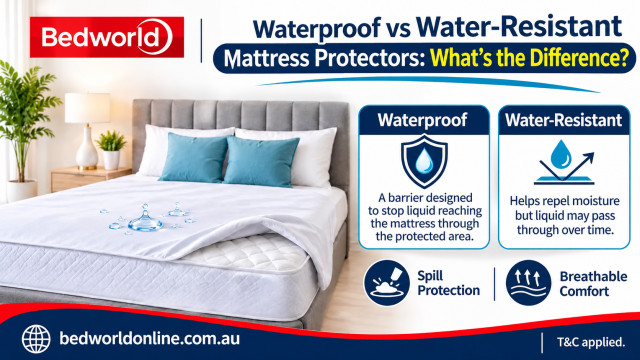 
Visit my Business Website
Welcome Visitor 1
To distribute this article more widely To manage this article or write your own article simply LOGIN
| ||||||
